
FASCIAL
STAR
NEW TOOLS
FASCIAL STAR
Fascial Star – the IASTM tool for manual therapy
IASTM tools are manual therapy instruments and, based on clinical reasoning, are extremely useful in the treatment of fascial restrictions, soft tissue fibrosis, chronic pain and even acute inflammation.
The correct use of the Fascial Star
With the Fascial Star, you can perform various manoeuvres whilst benefiting from the tool’s ergonomic design for the therapist’s hand. This is not guaranteed with other IASTM tools, which often cause strain on the therapist’s hand after prolonged use.
With the Fascial Star, you can effectively eliminate fascial restrictions and treat scar tissue through friction. Thanks to the ‘microtrauma’ to the soft tissue structure, treatment with the Fascial Star induces mechanical stimulation and a neurophysiological response. This microtrauma allows for the ‘resorption’ or remodelling of fibrosis or excess scar tissue, facilitating a neurophysiological reaction that results in the remodelling of soft tissue structures.
Fascial Star is a highly effective non-invasive approach for treating fascia in certain musculoskeletal conditions, whether chronic or acute.
Several studies have shown that myofascial trigger points are frequently associated with numerous painful clinical conditions, such as migraine, tension-type headache, temporomandibular joint dysfunction, neck pain, shoulder pain, epicondylitis, carpal tunnel syndrome, back pain, pelvic pain and whiplash syndrome.
Even scarring and adhesions resulting from trauma or surgery can be easily treated with Fascial Star.
Therapeutic indications for IASTM
Therapeutic indications include:
- Restricted joint movement
- Problems with muscle fibrosis or scarring
- Skin scarring
- Pain during movement.
Some ‘conditions’ (very often of myofascial origin) that derive enormous benefit from, as well as being suitable for, treatment are:
Epicondylitis and epitrochleitis
Carpal tunnel syndrome
Neck pain
- Shoulder GIRD
- Plantar fasciitis
- Rotator cuff tendinitis
- Patellar tendinitis
- Achilles tendinitis
The effects can be summarised in three points:
- Mechanical action
- Circulatory action
- Reflex action
Various studies have examined the benefits of using IASTM at a cellular level. These benefits include increased fibroblast proliferation (extracellular matrix – ECM), reduced scar tissue, enhanced vascular response and remodelling of the disorganised collagen fibre matrix.
Contraindications
Possible contraindications for the use of IASTM are:
- The quality of the tissues (and therefore the skin)
- Wounds, infections, tumours
- Inflammation (relative contraindication only in the presence of inflammation)
- Dysesthesia (i.e. altered sensitivity in the patient)
- Neurological or circulatory disorders such as venous thrombosis
Traditional types of cupping
1. Flash cupping
2. Dry cupping – is probably the most widely used method.
3. Wet cupping
4. Cupping with massage
Fascial cupping is a new method of cupping application, which takes into account new knowledge in neurology, the enzymatic and chemical effects of cupping therapy, and skilful, controlled and specific application for optimal results.
About Fascia
Fascial Dysfunction
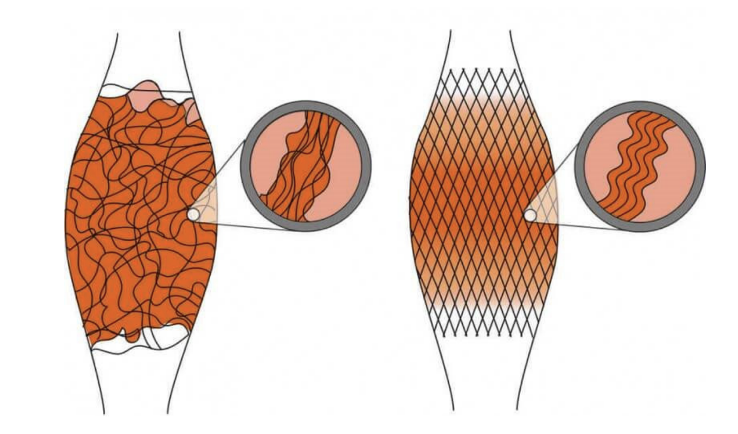
Fascial dysfunction is defined as a highly organised variability of specialised movements and an altered transfer of information through the extracellular matrix(Pilat 2011). There is a loss of optimal sliding between the endofascial fibres and the interfascial planes.
The force distribution that is important for biochemical signalling in shaping the optimal development of cells, their function and pathological processes can be altered and/or reduced, inducing abnormal tensions and consequently movement dysfunction (Furie 2008).
When the fascia is overstressed mechanically, inflamed or immobilised, collagen and matrix deposition becomes disorganised, leading to the formation of fibrosis and adhesions (Langevin 2008).